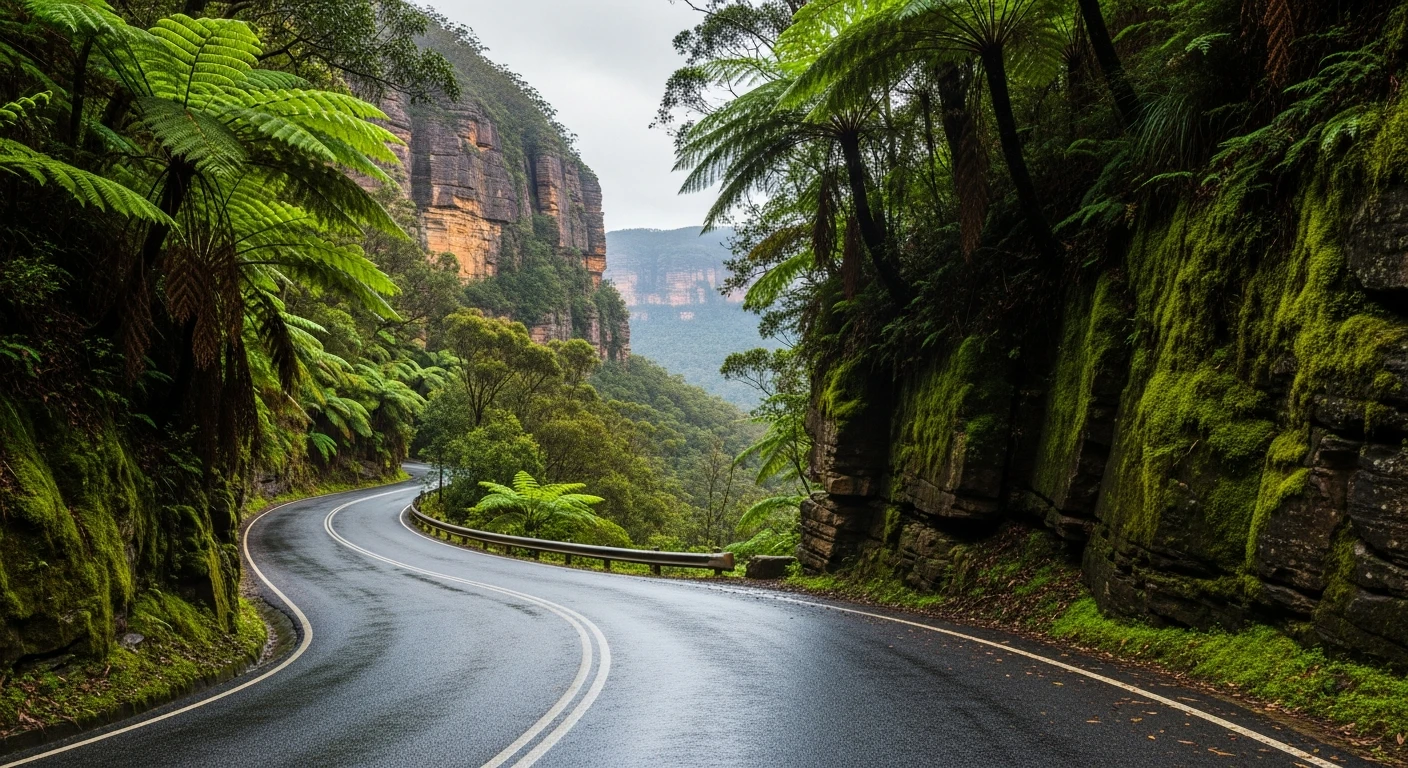
Flat Top Road
8.5 km
distance
1h
Contour time
3.0
difficulty
Unsealed
surface
Scenery
New South Wales
Barrington Tops National Park sits on one of the highest plateaux in NSW, reaching 1,550 metres at its highest points....
Road quality
Grade 3
Every segment scored on 40+ data signals.
Accessibility
Fully sealed
Best in 4WD. Peak season: Summer-Autumn.
7-day forecast
High altitude plateau track on the Barrington Tops. Rocky and exposed with some very muddy sections in spring. The elevation means snow is possible in winter. Good preparation and all-terrain tyres recommended.
Recommended gear: Recovery boards, Snatch strap, Tyre repair kit, Warm clothing.
The road
Flat Top Road is a fire trail on the Barrington Tops escarpment that delivers genuine high-altitude 4WD in one of NSW's most significant ecological landscapes. The plateau reaches 1,550 metres and holds a World Heritage pocket of Antarctic beech - a remnant of Gondwanan temperate rainforest with individual trees thousands of years old. The track crosses sub-alpine grassland and heath above the treeline before dropping into the beech zones on the sheltered slopes. The surface is rocky throughout with sections that become very muddy in spring. Snow is possible in winter - the elevation here is genuine and the temperatures are consistently cold. The contrast between the exposed plateau and the sheltered beech forest is striking. Below the escarpment, Gloucester and Dungog provide services and the Barrington valley is one of the prettiest in the Hunter region. The 1994 Operation Thunderstruck cleared introduced animals from the plateau's most sensitive vegetation communities - the ecological recovery since then has been significant.
Flat Top Road is a fire trail on the Barrington Tops escarpment that delivers genuine high-altitude 4WD in one of NSW's most significant ecological landscapes.
Why this road

The region
Barrington Tops National Park sits on one of the highest plateaux in NSW, reaching 1,550 metres at its highest points. The plateau is a World Heritage area and holds a remarkable pocket of Antarctic beech - a southern hemisphere temperate rainforest with trees that are thousands of years old. The track crosses sub-alpine grassland and heath above the treeline before dropping into the beech zones on the sheltered slopes. The tablelands are cold and wet - very different from the coastal forests below.

History
Barrington Tops was the site of the 1994 'Operation Thunderstruck' - a major NPWS removal of introduced animals from the plateau that cleared deer, feral horses and pigs from the most sensitive high-altitude vegetation communities.
Before you go
Fuel at Gloucester or Dungog before departure. The plateau is cold year-round and can receive snow June through August. Warm clothing essential even in summer. Check NPWS conditions - the track can be closed after heavy rain or during fire events. Allow 3-4 hours for a return trip.
See a routing error?
Flag itWorth stopping for
Gloucester, NSW
The gateway town below the Tops - good food options and the Gloucester visitor centre has current track condition reports.
Dungog
The lower Hunter Valley entry town for Barrington Tops from the south - known for its arts community and the Dungog Common recreation area.
Route
Start
Barrington Tops plateau
End
Flat Top ridge
Gallery

More roads like this